
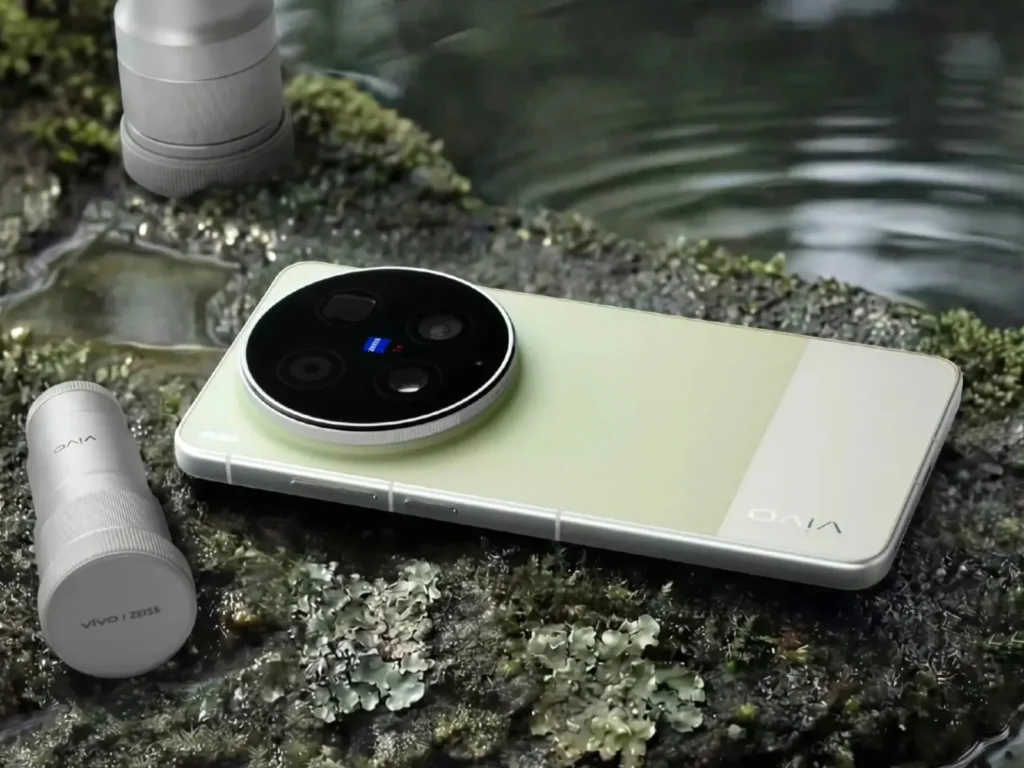
Vivo X300 Ultra, kamera deneyiminde standartların dışına çıkarak dikkat çekiyor.
“`html

Vivo is taking a distinctive approach in the race to enhance smartphone cameras. The company’s new flagship device, the Vivo X300 Ultra, aims to become a platform that meets the needs of photo and video creators, rather than just offering higher resolution sensors or more cameras. Features such as external telephoto accessories, physical camera controls, filter support, and tripod compatibility position the X300 Ultra far apart from traditional smartphones. Vivo appears to be specifically targeting content creators who use mirrorless cameras with this model.
An impressive example of this approach is the revamped Photography Kit package. While many manufacturers opt to add more telephoto cameras, Vivo expands its existing 85 mm telephoto system with external teleconverters. Users can choose from options designed for 200 mm or longer shots, as well as a 400 mm option. These accessories provide a more compact and portable solution, magnifying the camera’s image rather than using independent lenses, yet significantly enhancing the zoom capacity.
Thanks to the bayonet-type mounting system on the protective case, filters and various accessories can be connected directly to the phone. Support for ND, UV, and circular polarizing filters allows for more control during outdoor shoots. Additionally, Arca-Swiss compatible tripod mounts offer more stable usage at long focal lengths. The updated camera grip enriches the experience with physical components like a video recording button, zoom lever, shutter button, programmable function button, and control wheel.
The camera hardware of the Vivo X300 Ultra also looks impressive. The main camera continues to use a 35 mm equivalent focal length, providing a more natural perspective compared to the wider angles seen in many flagship models. The Sony Lytia 901 sensor used in the main camera boasts a 200-megapixel resolution and a size of 1/1.12 inches. The telephoto camera is supported by an f/2.7 aperture 85 mm lens and a 200-megapixel Samsung HP0 sensor. Meanwhile, the ultra-wide camera features a 14 mm lens and a 1/1.28-inch sensor. On the front, a 50-megapixel selfie camera with autofocus is present.
YOU MAY ALSO LIKE
Redmi Note 17 Pro Max features emerge before launch

Galaxy S27 Pro and Ultra may double gaming power
Samsung offers free solution for Galaxy S26 Ultra screen issue
Galaxy S26 FE leak reveals Exynos 2500 and 4,900 mAh battery

Sony Xperia 1 IX revealed earlier than expected
Vivo X300 Ultra shines with its portrait and zoom performance
In real-world usage, the device reportedly delivers highly successful results, especially in standard Photo mode. Although the portrait mode theoretically offers advanced depth of field, some shots exhibited excessive edge smoothing. Nonetheless, portraits captured at 35 mm and 50 mm focal lengths stand out with high detail levels and successful color rendition. The device is also noted for its strong performance in dynamic range and white balance. The default 12.5 megapixel resolution is regarded as a balanced option between file size and image quality.
Today’s Featured Deals
ADVERTISING — This content contains affiliate links. Teknoblog may earn a commission from purchases made through these links.
When transitioning to 70 mm and 85 mm focal lengths, the image quality remains largely intact. In particular, the 85 mm focal length provides tighter framing and natural facial details for portrait shoots. However, at 135 mm, the processing effects become more pronounced, making images appear more artificial. Thus, for users seeking high zoom, it might make more sense to take shots in standard photo mode. At 170 mm and 230 mm focal lengths, while details are still preserved, the effects of software processing become more apparent. Nonetheless, results are reported to be strong compared to many competing phones.
On the video front, Vivo offers an extensive range of features. All three rear cameras can record in 4K at 120 fps and 8K at 30 fps, while the front camera supports 4K at 60 fps. For professional users, various frame rate options like 24 fps, 25 fps, 50 fps, and 100 fps are available, along with Log recording support and Samsung’s APV codec. These features cater to users looking to perform detailed editing on their footage later.
The electronic image stabilization system is regarded as one of the device’s strongest features. Supported by Ultra Stabilization and Horizon Leveling modes, it ensures highly stable images even during shots taken while walking. Video quality is generally notable for its high dynamic range, successful contrast, and balanced color production. However, it’s noted that the sharpness level on the ultra-wide camera falls slightly below expectations. Even so, the Vivo X300 Ultra offers an experience that goes beyond the typical smartphone approach for users focused on photo and video production. When combined, the hardware, accessory support, and professional recording options clearly showcase the device’s ambitions in mobile photography.
“`